

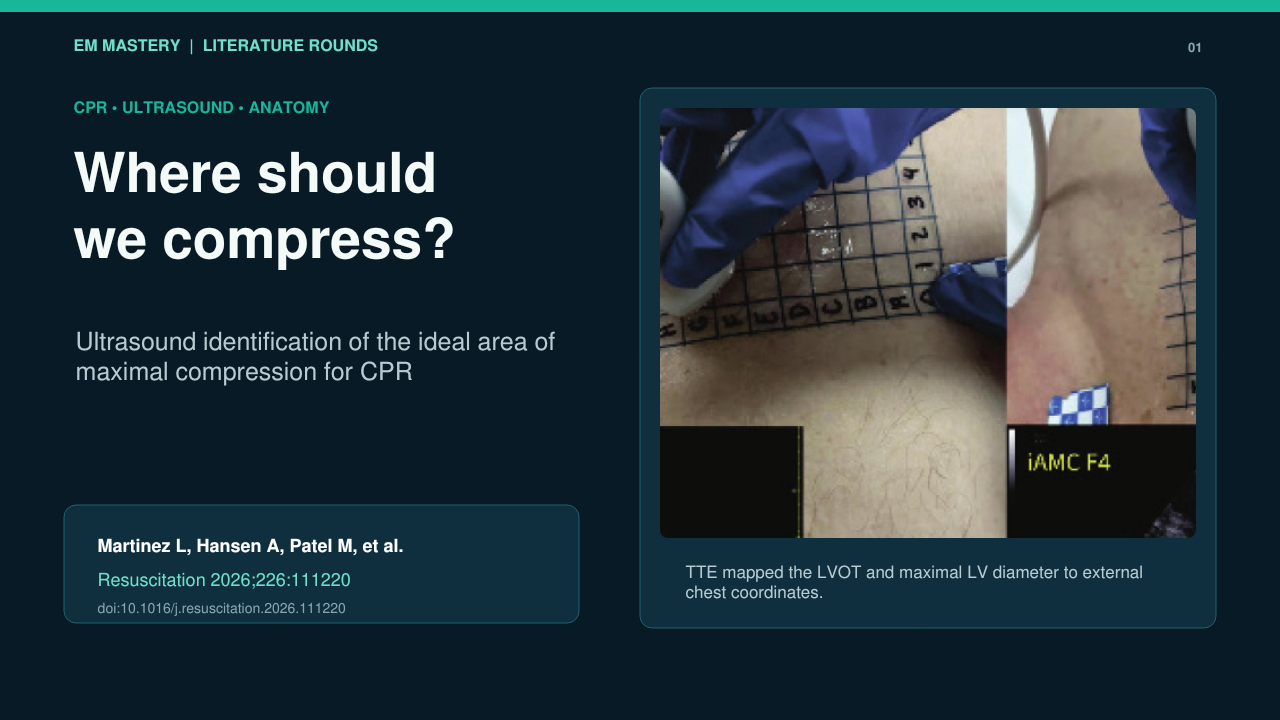
The rates of Pulseless Electrical Activity (PEA) in out of hospital cardiac arrests (OHCA) is rising, however survival from PEA is low. The majority...

A 62 yo patient with a previously diagnosed spontaneous coronary artery dissection (SCAD) presents with sudden onset 10/10 central severe chest pain...

We're back to an old question of should we give antibiotics for otitis media? The factors always being weighed up have been around the benefit which...

The patient with vertigo can be a clinical challenge. Patients may describe their symptoms as vertigo, or the room spinning, or dizziness, or a proble...

Here’s a patient presentation, I have residents and registrars discuss with me frequently. An elderly patient who had a mechanical fall at home is b...

Patients with acute aortic syndrome, may be very difficult to diagnose. Patients who present with textbook ripping severe chest pain and accompanyin...

Syncope has three components: (15 minutes read)
- Loss of consciousness
- Loss of postural tone and
- Return to baseline
Patients with syncope com...

Here is a common scenario: The resident presents a case of a 58 yo patient who has presented with shortness of breath. They go over the examination,...

The 'zero-point survey' is the pre-primary survey. It is about preparing self, the team, the environment and the equipment. It is a 'cognitive roadmap...

Survival from out of hospital cardiac arrest varies from region to region. This makers sense as it depends on resources, such as medical and nursing s...

The Study
Cohen AL et al. Femoral artery Doppler ultrasound is more accurate than manual palpation for pulse detection in cardiac arrest. Resuscitati...

Non-traumatic subarachnoid haemorrhage (SAH) accounts for 5% of acute headache presentations to the emergency department. The urgency to make a diagno...

Selected Articles
Join the Newsletter
Receive updates in your inbox and start today!
