Syncope accounts for a significant proportion of Emergency Department presentations and hospital admissions.
Despite this, many patients undergo extensive investigations with relatively low diagnostic yield, while others with life-threatening cardiac causes are missed.
This paper synthesises the current evidence and integrates recommendations from the European Society of Cardiology (ESC) and American ACC/AHA/HRS syncope guidelines into a practical approach for clinicians.
THE PAPER
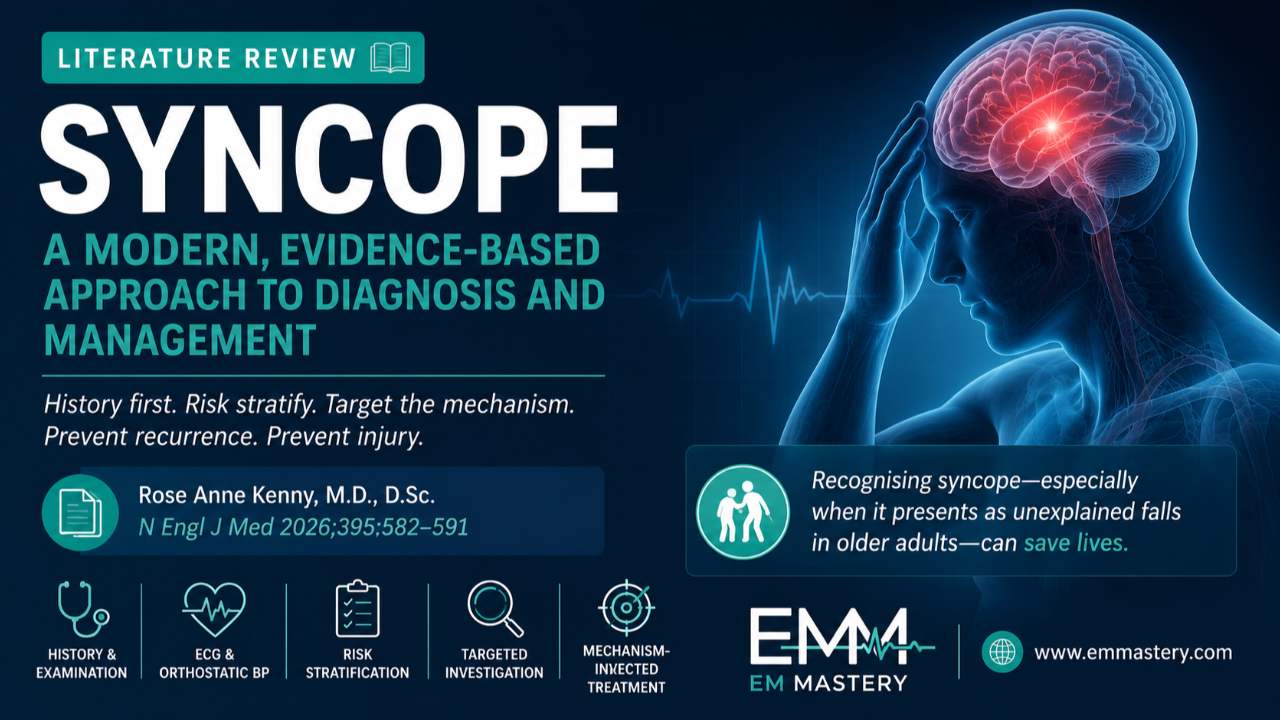
Rose Anne Kenny. Syncope. N Engl J Med 2026;395:582–591
The major message from this review is:
The diagnosis of syncope is usually made from the history, examination, orthostatic blood pressure and ECG—not from indiscriminate testing.
Risk stratification should then determine who requires further investigation or admission.
A further majorpoint is that older patients often present with unexplained falls rather than obvious syncope, and many of these falls may actually represent unwitnessed syncope.
Definition
Syncope is:
-
transient loss of consciousness, due to transient cerebral hypoperfusion
-
associated with loss of postural tone
-
followed by rapid spontaneous recovery to baseline.
Episodes usually last less than one minute.
The review divides syncope into three major mechanisms:
-
Reflex syncope: (90% of cases in younger adults and 40% among older adults)
-
-
vasovagal syncope: It is a reflex that results from bradycardia (vagal excess), hypotension (withdrawal of sympathetic innervation), or most commonly, a combination of the two. Usually associated with a systolic blood pressure of no more than 80 mm Hg, a heart rate of less than 40 beats per minute, or asystole lasting at least 3 seconds.
-
situational syncope: is due to an action or situation such as emotional stress, micturition, swallowing, or coughing.
-
carotid sinus syndrome: It is associated with carotid sinus hypersensitivity and occurs during carotid sinus massage. It results in a pause lasting at least 3 seconds or by a decrease in the systolic blood pressure of at least 50 mm Hg. It occurs almost exclusively in older adults and accounts for 9 to 17% of syncopal events and up to 30% of unexplained falls.
-
Features of Reflex Syncope
-
Long history of recurrent syncope, in particular occurring before the age of 40 yr
-
after unpleasant sight, sound, smell, or pain
-
Occurrence with prolonged standing
-
Occurrence during meal
-
Occurrence in crowded or hot places
-
Autonomic activation before syncope: pallor, sweating, nausea, or vomiting
-
Occurrence with head rotation or pressure on carotid sinus (e.g., due to tumors, shaving, or tight collars)
-
Absence of heart disease
-
Orthostatic hypotension
-
-
Cardiac syncope
-
- It results from conditions such as arrhythmias, structural heart disease, pulmonary hypertension and vascular disorders such as pulmonary embolism and aortic dissection, that may cause reduced cardiac output or cerebral perfusion. It occurs in up to 5% in younger adults, reaching 30% in older patients and leading to higher morbidity and mortality
- Features
-
Occurrs during exertion or when supine
-
Palpitations followed by syncope
-
Family history of unexplained sudden death at young age
-
Pulmonary hypertension or structural heart, coronary artery, or pericardial disease
-
ECG findings suggesting arrhythmia causing syncope:
-
Bifascicular block
-
Intraventricular conduction abnormalities (QRS duration, ≥0.12 sec)
-
Mobitz type I second-degree atrioventricular block and first-degree atrioventricular block with markedly prolonged PR interval
-
Asymptomatic mild sinus bradycardia (40–50 beats/min)or slow atrial fibrillation (40–50 beats/min) not caused by negatively chronotropic medications
-
Nonsustained ventricular tachycardia
-
Pre-excited QRS complexes
-
Long / short QT intervals
-
Early repolarization
-
Brugada Syndrome with ST-segment elevation with type 1 morphology in V1, V2, and V3
-
Negative T waves in right precordial leads and epsilon waves suggestive of arrhythmogenic right ventricular cardiomyopathy
-
Left ventricular hypertrophy suggesting hypertrophic cardiomyopathy
My ECG's of Syncope memory card

- A particularly important point is that older patients often present with unexplained falls rather than obvious syncope, and many of these falls may actually represent unwitnessed syncope.
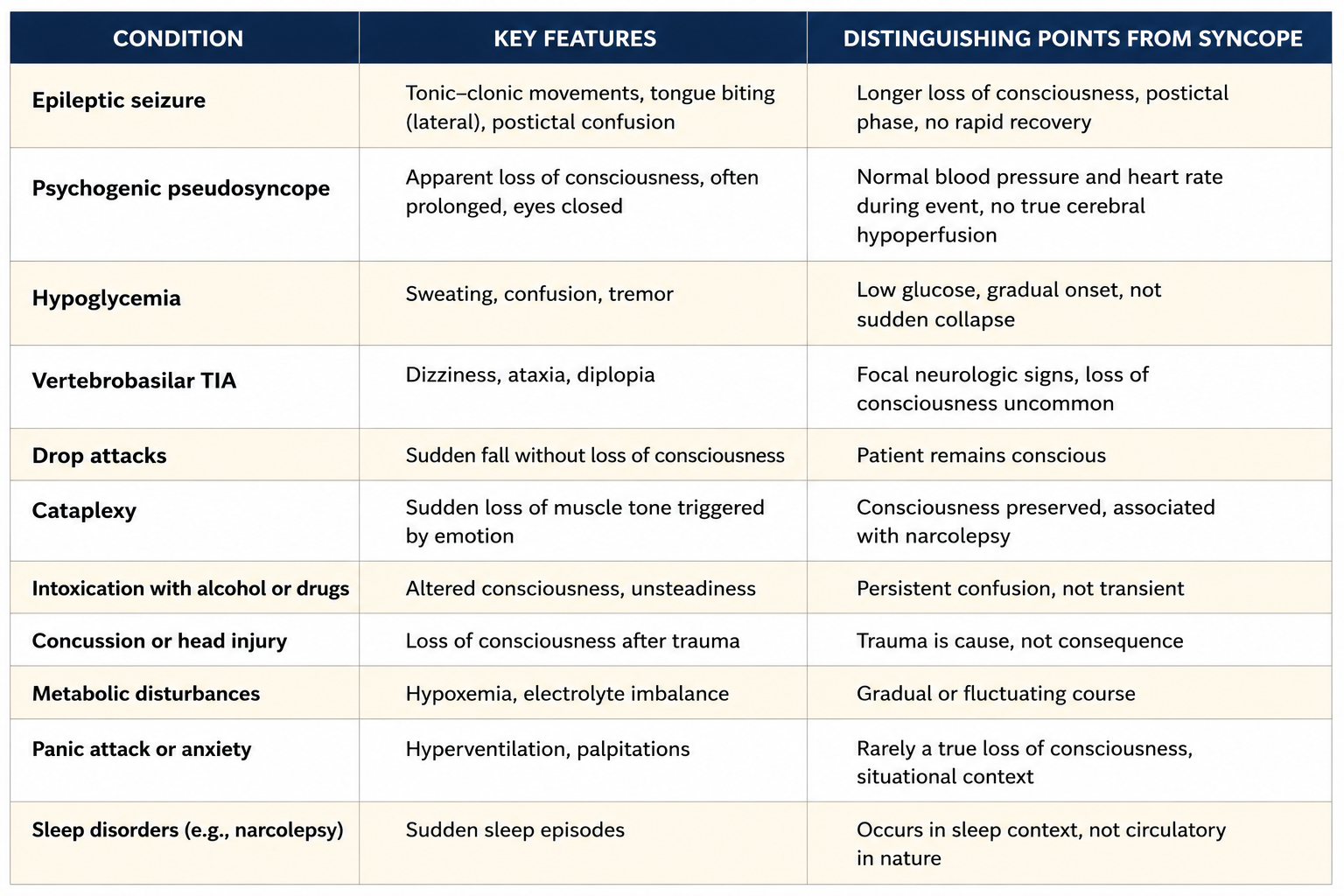
Syncope mimics
The most common is epilepsy. Urinary incontinence does not distinguish between syncope and epilepsy and may occur in 10 to 20% of syncopal events. Other features often attributed to epilepsy such as tongue biting, jerking movements, and postevent drowsiness also occur in syncope.
 The review examines:
-
causes of syncope
-
evidence supporting diagnostic strategies
-
risk stratification
-
investigations
-
management
-
disposition from ED
-
management of older adults
-
comparison of contemporary international guidelines.
What they found
Start with History, Physical Exam, Orthostatic BP and ECG
A careful history includes the events of the current episode and any previous episodes, as well as eyewitness accounts. It should include:
-
triggers
-
posture and activity: prolonged standing, hot environments
-
prodrome if any, as well as what happenned during and after the event: emotional stress, pain, sweating, nausea, meals.
-
any cardiac or neurological history
-
the following finding may not be helpful as they occur in seizures as well as syncope:
-
urinary incontinence occurs in 10–20% of syncope,
-
tongue biting can occur in both
-
brief post-event confusion can occur in syncope.
-
medication review.
Actively look for:
This is particularly important in older patients.
Features that increase the probability of cardiac syncope include:
-
age > 60
-
Known heart disease: structural heart disease, valvular heart disease, congenital heart disease
-
exertional syncope
-
syncope while seated or supine
-
sudden collapse without warning
-
chest pain
-
palpitations
-
abnormal ECG
-
family history of sudden cardiac death.
These patients require urgent investigation.
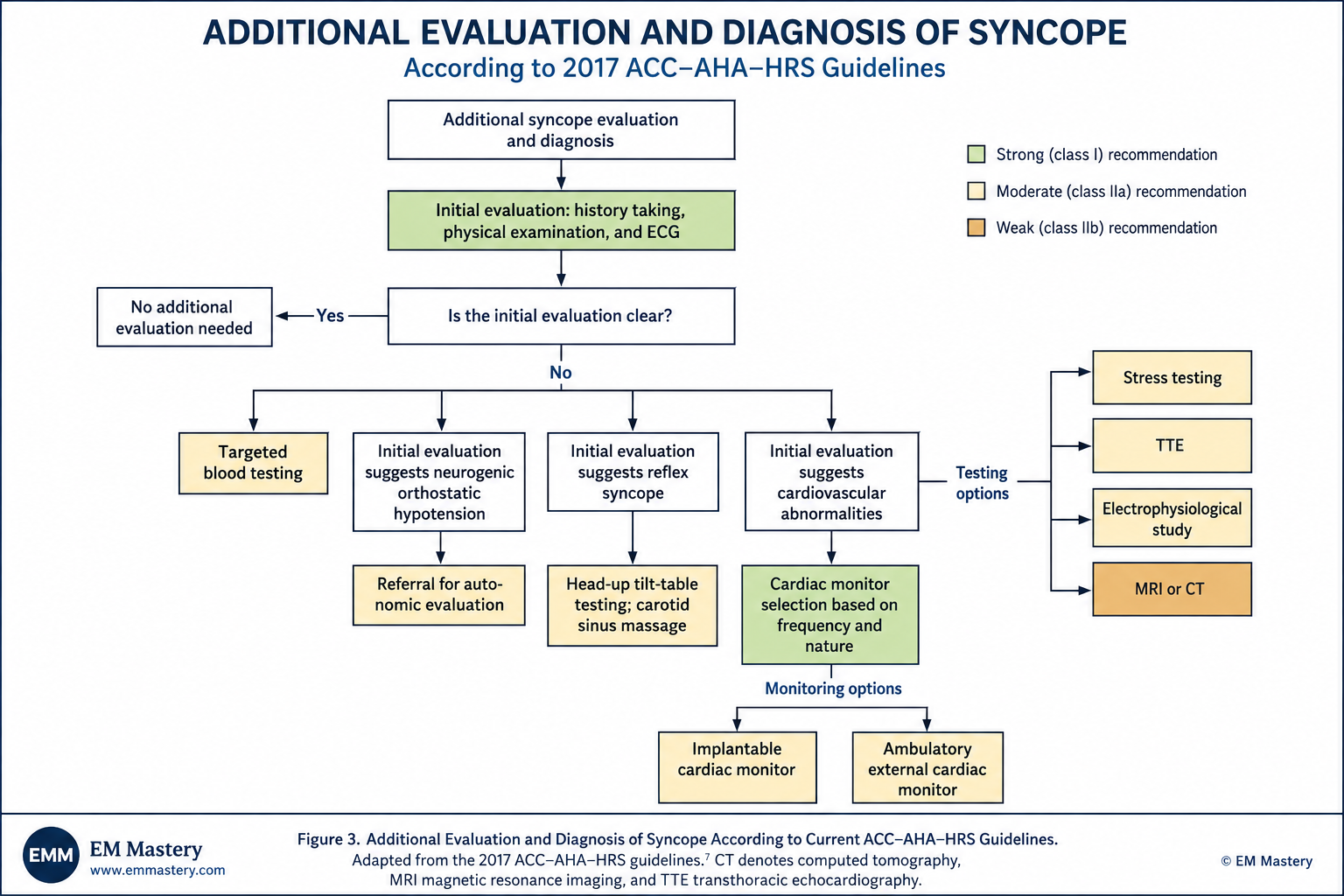
Target Investigations
Routine CT brain scans, EEGs and large blood panels are discouraged.
Investigations depend on suspected mechanism. Here is a recommended approach:
Who needs admission?
One of the strongest practical messages concerns ED disposition.
Low-risk patients
Can usually be discharged.
Intermediate-risk patients
May benefit from an Emergency Department Observation Unit with approximately 6–12 hours of monitoring.
High-risk patients
Require hospital admission.
The review cites randomised evidence demonstrating that ED observation produces similar clinical outcomes to admission but at substantially lower cost.
Management
Treatment should target the mechanism, not simply the diagnosis.
Reflex / Orthostatic syncope
Management includes:
-
hydration
-
increased salt intake where appropriate
-
avoidance of triggers
-
medication review: note that the lowest risk of hypotensive events were associated with angiotensin-converting–enzyme inhibitors (odds ratio, 0.85; 95% CI, 0.81 to 0.89) and calcium-channel blockers (odds ratio, 0.81; 95% CI, 0.74 to 0.90).42
-
reduction of culprit antihypertensives
-
reduction of psychotropic medications.
For persistent orthostatic hypotension Midodrine and Droxidopa have been found to consistently reduce orthostatic symptoms. Evidence for fludrocortisone remains modest.
Bradycardic syncope
Patients with documented symptomatic bradycardia benefit substantially from pacing.
Meta-analysis demonstrated greater than 50% reduction in recurrent syncope following pacemaker implantation in appropriately selected patients.
Complex Syncope
This occurs where multiple mechanisms coexist. This most often occurs in older patients. For example, the following can occur simultaneously:
Guidelines
The review compares:
-
ESC 2018 Guidelines
-
ACC/AHA/HRS Guidelines
Both recommend:
However, the ESC guidelines place greater emphasis on:
-
dedicated syncope clinics
-
earlier implantable loop recorder use
-
behavioural interventions for reflex syncope.
What does this mean in practice?
✅ 1. Trust your history
Most diagnoses can be made without extensive testing.
✅ 2. Perform orthostatic blood pressures routinely
They remain one of the highest-yield bedside investigations.
✅ 3. Risk-stratify, don't admit everyone
Observation units are underused and supported by evidence.
✅ 4. Think cardiac until proven otherwise in older patients
Particularly with:
✅ 5. Don't diagnose seizure because of urinary incontinence
This review clearly dispels that common misconception.
✅ 6. Review medications carefully
Many episodes are medication-related and potentially preventable.
✅ 7. Think of syncope in every unexplained fall
Especially in patients over 65 years.
This may be the single biggest practice-changing message for Emergency Physicians.
Bottom Line
The message is simple:
History → Examination → Orthostatic BP → ECG → Risk Stratification → Targeted Investigation → Mechanism-Specific Treatment
Avoid indiscriminate testing, identify high-risk cardiac syncope early, recognise that unexplained falls in older adults often represent syncope, and use observation units for appropriately selected intermediate-risk patients. It is an excellent update.
Related Literature Rounds
The FAINT Score
Listen to my Syncope Podcast on Spotify