Beware 1:1 conduction with 'Pill in the Pocket' Flecainide for A Fib
Mar 03, 2026
In patients presenting with Atrial Fibrillation, when we have a previous cardiac ECHO, with no known structural disease, we can offer a 'Pill in the Pocket' Approach with 200mg of Flecainide PO, to revert the patient to sinus rhythm.
BEWARE: I will explain why we should probably not to do exactly this, but that we should also treat the AV node.
A CASE
A 68 yo patient presents to the emergency department with a complaint of palpitations that started 3 hours previously. There is a known history of Paroxysmal Atrial Fibrillation and the patient has been treated with Flecainide (200mg) as a 'Pill in the Pocket' Approach before.
The patient's ECG shows atrial fibrillation with a rapid ventricular response.
Flecainide is a 1C antiarrhythmic that Blocks fast Na channels and slows cardiac conduction. It is used in Afib/Flutt and SVT in patients without structural heart disease. It Widens QRS and does not affect QTc.
It should not be given in patients with structural heart disease, coronary occlusion or haemodynamic compromise.
Soon after the Felcainide is given, the patient's palpitations worsen and she develops chest pain. An ecg is done and is shown below.
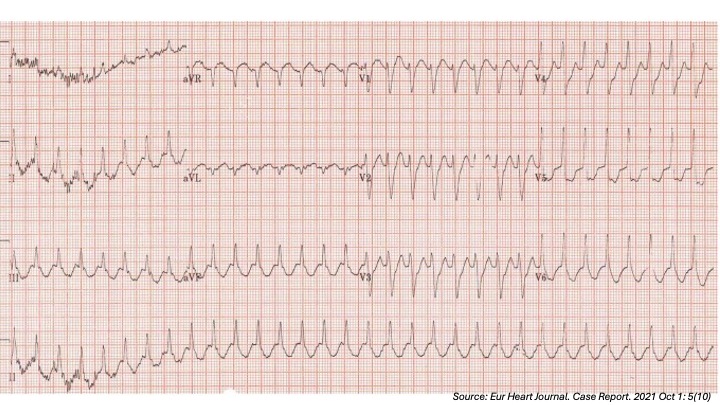
The heart rate is 192bpm, with broad QRS complexes. there are p waves before every QRS, so this is Atrial Flutter with 1:1 conduction. This can lead to dangerous ventricular arrhythmias and needs to be treated with cardioversion.
Why does it occur?
The Flecainide is a 1C antiarrhythmic and slows conduction, however it doesnt affect the AVN. In most patients the AVN blocks the complexes such that they are conducted in a 2:1 or 3:1 block. However in up to 5% of patients the AVN doesn block and as the atrial rate is decreased to 230-240 by the Flecainide, it conducts in a 1:1 fashion, resulting in a potentially very dangerous situation.
The Solution?
When treating with Flecainide as a 'Pill in the Pocket', rather than giving the normal 200mg PO dose, give 100mg and also give an AV nodal blocker such as Metoprolol at 25 mg.
Listen to the 2 minute video synopsis @drpeterkas on instagram
FOLLOW ME ON INSTAGRAM @drpeterkas for a new way to learn. major points presented in 1.5 to 2 minutes.
Join Our Free email updates
Get breaking news articles right in your inbox. Never miss a new article.
We hate SPAM. We will never sell your information, for any reason.